
Digital Money and Kids: Cards, Apps and the Problem of Invisible Spending
When paying is a tap, children never see money leave. Here is how to make digital spending visible at home, handle in-game purchases, and teach online safety.
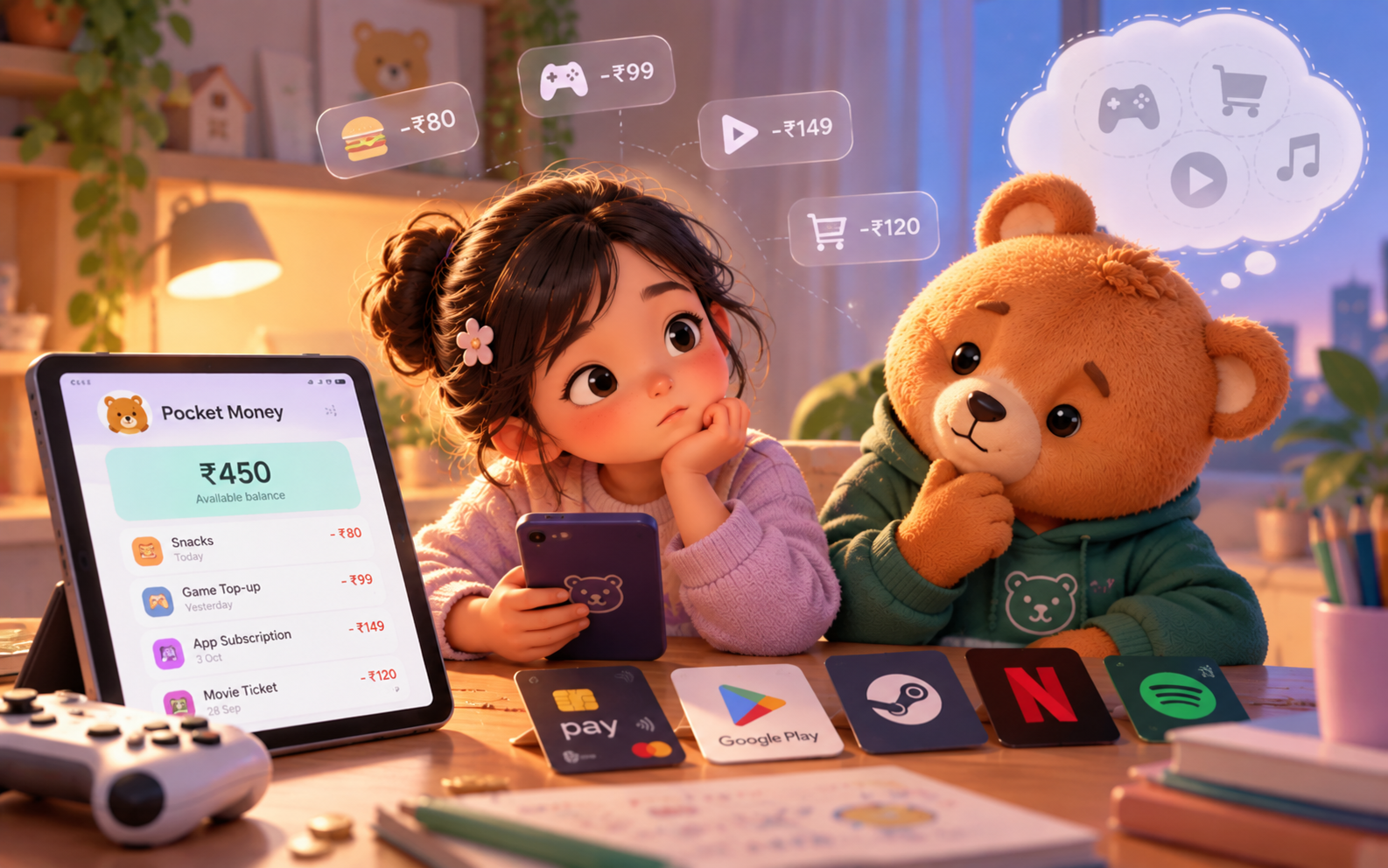
Walk into almost any shop today, from a supermarket to a small corner café, and you can pay with a tap of a card or a phone. Digital payments have changed how the world pays. A quick tap or scan, and the payment is done. For adults, it is wonderfully convenient.
For children learning about money, it creates a new challenge. When money is invisible, it is much harder to understand.
The problem with invisible money
When you pay with cash, you feel it. Your wallet gets lighter. You see the notes leave your hand and the change come back. Children watching cash transactions learn, almost without trying, that money is finite and that spending reduces what you have.
With digital payments, none of that is visible. A child watches a parent tap a phone and receive groceries, food, or a movie ticket. To a young mind, it can look like the phone simply produces things. The link between earning, having, and spending disappears.
Many adults notice this too: it is easier to overspend with a card or a payment app than with cash, because the money never feels like it is really leaving.
Why children still need to learn with something tangible
This does not mean you should avoid digital money. Your children will live in a cashless world, and they need to be comfortable with it. But the foundation of money understanding, that money is limited and every choice has a cost, is easiest to build when money is visible.
That is why many families start with cash or jars for young children, then move to digital tools as children grow.
Making digital spending visible at home
Here are simple ways to bring invisible money back into view:
- Narrate your payments. When you pay by card or phone, say it out loud: “That was this week's groceries. That came out of our bank account.”
- Show the transaction history. Occasionally sit with your child and look at a week of payments. Let them see how small amounts add up.
- Use cash for their early lessons. For young children, physical money builds the right intuition.
- Introduce a balance they can see. As children get older, give them a record of their own money, whether a notebook, a passbook, or an app, so they always know what they have.
- Talk about online purchases. Explain that in-app purchases, game coins, and subscriptions cost real money, even when no cash changes hands.
In-game purchases and subscriptions
One of the biggest money traps for children today is inside games and apps. Virtual coins, skins, and loot boxes are designed to feel cheap and fun. A child might not realise that a few small purchases can add up to a significant amount.
Some sensible precautions:
- Keep payment methods off your child's devices, or protect them with a PIN only you know
- Turn on purchase approvals in app stores where available
- Talk openly about how these games are designed to encourage spending
- If your child wants in-game items, let them buy them from their own pocket money, so they feel the trade-off
That last point is powerful. When a child has to choose between a game skin and a real-world item they have been saving for, they start thinking critically.
When should children use digital payments themselves?
There is no fixed age, but readiness matters more than age. A child is ready for some digital spending when they:
- Understand that digital money is real money
- Can keep track of a balance
- Have shown they can manage cash responsibly
- Know the basics of online safety, such as never sharing a PIN or one-time code
When they do start, keep limits small and supervision close. Some banks and payment apps now offer options for parents to set up supervised or limited payments for children; check what your own bank offers before you begin.
Online safety comes first
Digital money also brings fraud risks. Teach children the basic rules early:
- Never share a PIN, password, or one-time code with anyone, even someone claiming to be from a bank
- Never approve a payment request or scan a QR code you don't recognise, even if it promises you money
- Ask a parent before clicking links about prizes, cashback, or free gifts
- Tell a parent immediately if something feels strange
These rules protect children now and build habits that will protect them as adults.
Bridging cash and digital
The ideal approach combines the best of both: the visibility of cash with the convenience of digital. Children need to see their balance clearly, understand every addition and subtraction, and still practise in a world that is increasingly cashless.
That is the gap Pocket Cub was built to fill. You keep the real money, and Pocket Cub keeps the record, so your child can see exactly what they have, what came in, and what went out. Money becomes visible again, even in a cashless world.
Digital payments are here to stay. Our job is to make sure our children understand the money behind the tap.